Coldcard Hack 2026: How a 5-Year Firmware Bug Drained $89M+ From Bitcoin's Most Secure Wallets
Published: August 3, 2026 at 2:05 PM IST | Reading Time: 12 minutes
Category: Cryptocurrency Security | Tags: #ColdcardHack #HardwareWalletSecurity #BitcoinSelfCustody #SeedPhraseVulnerability #CryptoColdStorage #FirmwareBug #RNGExploit #AICybersecurity #CoinkiteBreach #NotYourKeysNotYourCoins
Article Summary
TL;DR: On July 30, 2026, a mysterious attacker drained over $89 million in Bitcoin from what were supposed to be the most secure wallets on Earth — Coldcard hardware wallets. The weapon? Not a stolen seed phrase. Not a phishing email. Not even physical access. Just a silent firmware bug that had been hiding in plain sight for five years, turning military-grade hardware RNG into a predictable guessing game. If you own a Coldcard, your funds may be at risk right now — and updating your firmware won't save you. Here's everything you need to know.
The Night Bitcoin's Fort Knox Fell
It was supposed to be an ordinary Thursday evening. Bitcoin was trading around $64,315. HODLers were sleeping easy, their private keys locked away in Coldcard devices — the gold standard of Bitcoin self-custody, the wallet that security professionals and cypherpunks swore by.
Then, at 21:56 ET on July 30, 2026, everything changed.
In 41 minutes flat, an unknown attacker swept through 1,196 Bitcoin addresses, draining 1,082.65 BTC — approximately $70 million at the time. No one touched a single device. No seed phrases were leaked. No phishing links were clicked. The attacker simply guessed the private keys from a distance, using nothing but a computer and a five-year-old firmware flaw.
By August 3, the damage had spiraled to 1,367 BTC stolen from 4,585 addresses, with losses nearing $89 million and climbing. Three waves of attacks. Thousands of victims. And the worst part? The vulnerability had been sitting in open-source code since March 2021, waiting for someone smart enough — or AI-powered enough — to find it.
What Is Coldcard? Why Did Everyone Trust It?
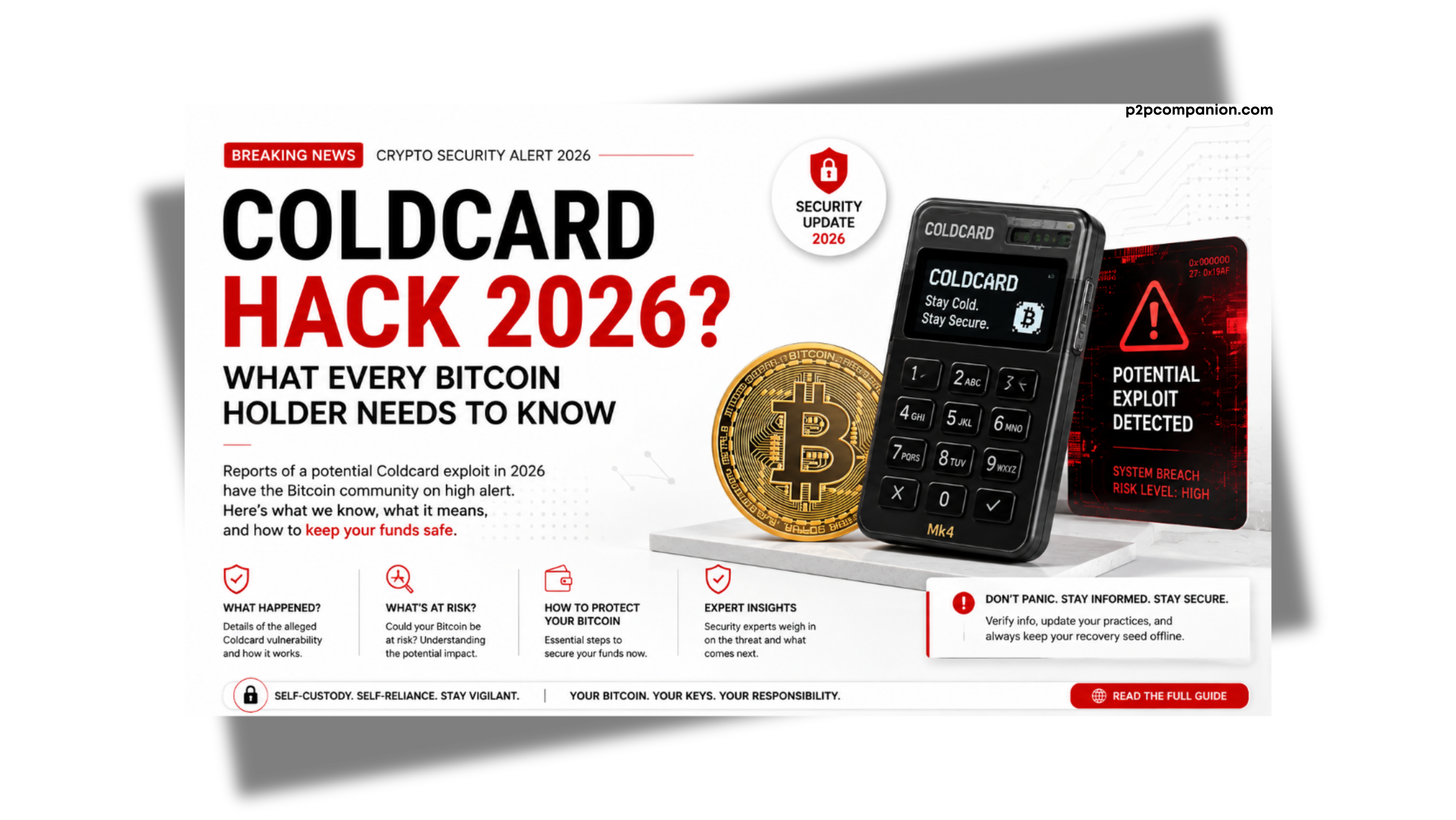
Coldcard, manufactured by Canadian firm Coinkite, has long been the darling of Bitcoin purists. Unlike flashy multi-asset hardware wallets, Coldcard is Bitcoin-only, air-gapped, and built like a calculator from the 1980s — deliberately ugly, deliberately paranoid.
It was the wallet for people who really understood security. The kind of people who laughed at exchange hacks, who mocked FTX victims, who preached "not your keys, not your coins" with religious fervor. Coldcard users were the ones who got it.
The device promised two critical security guarantees:
- Physical Isolation: Private keys never leave the device. No Wi-Fi. No Bluetooth. No USB data connection unless you explicitly enable it.
- True Randomness: A dedicated hardware True Random Number Generator (TRNG) on the STM32 microcontroller would create seed phrases with 128 bits of entropy — mathematically impossible to guess.
The first promise held. The second? It was a lie for five years.
The $89 Million Question: What Actually Went Wrong?
The Bug That Broke Bitcoin's Backbone
Here's where things get deeply technical — and deeply terrifying.
In March 2021, a single commit in Coldcard's firmware changed the seed generation call from ckcc.rng_bytes (which correctly reached the STM32 hardware TRNG) to ngu.random.bytes (which routed through a cryptographic support library called libngu).
The problem? A classic C preprocessor macro bug.
Coldcard's production configuration correctly defined MICROPY_HW_ENABLE_RNG = 0 because Coinkite had written its own hardware RNG wrapper. But libngu checked whether the macro existed, not whether it was enabled. Since the macro was defined (even as zero), libngu assumed hardware randomness was active and bound to MicroPython's rng_get() function.
MicroPython, seeing the value was zero, compiled a software fallback called Yasmarang instead of the hardware peripheral.
The result: Every call to Coldcard's random number generator for five years routed through a weak software PRNG — not the dedicated hardware chip.
Why Yasmarang Was a Death Sentence
Yasmarang initialized its state from just three inputs:
- The chip's 32-bit unique identifier (serial number)
- The SysTick timer (a periodic down-counter with at most 80,000 possible values)
- The RTC (real-time clock) registers
On Mk3 devices, the RTC oscillator was often disabled, meaning those registers held static or near-static values on cold boot. Once those inputs were fixed, the generator became fully deterministic.
An attacker who could characterize the timing distributions of their own Coldcard device could dramatically narrow the search space for any other device running the same firmware. Block's engineering team calculated the effective entropy at approximately 40 bits on Mk3 devices — compared to the 128-bit minimum that BIP-39 expects.
40 bits. That's not a password. That's a speed bump.
To make it worse, libngu XORed the Yasmarang output with a second Yasmarang instance initialized from public hardcoded constants. XOR of two deterministic streams with known starting states produces a deterministic output. The health check that followed — rejecting adjacent repeated values — was trivially passed by any non-degenerate PRNG.
The wallet generation step then hashed the bytes with SHA-256d. But here's the thing cryptographic hashing cannot increase entropy. If there are at most 2^40 candidate inputs, there are at most 2^40 candidate outputs. The attacker only needed to check about one trillion possibilities. Modern hardware can do that.
How the Attack Worked (Without Touching a Single Device)
The attacker never needed your Coldcard. They never needed your seed phrase. They never needed to phish you, infect your computer, or break into your home.
Here's the chilling process:
Characterize the PRNG: The attacker bought Coldcard devices, analyzed the Yasmarang initialization, and mapped out the possible seed spaces based on chip UID and timer distributions.
Generate Candidate Seeds: On their own powerful machines, they generated all possible seed combinations within the reduced entropy space.
Derive Addresses: For each candidate seed, they derived the corresponding Bitcoin addresses using the public BIP-39/BIP-44 derivation paths.
Check the Blockchain: They compared these addresses against the public Bitcoin blockchain, looking for addresses with balances.
Sweep: When matches were found, they simply constructed transactions and moved the funds to their own wallets.
Every drained wallet stayed physically untouched in its owner's safe the entire time. The devices were locked in vaults, buried in backyard containers, stored in bank safety deposit boxes — and it didn't matter one bit.
The Three Waves of Destruction
Wave 1: The Big Bang (July 30, 21:56 ET)
- Duration: 41 minutes
- Addresses Drained: 1,196
- BTC Stolen: 1,082.65 (~$70M)
- Signature: 30 sat/vB, no-change pattern
- Strategy: One address at a time, highest-value wallets first
Chainalysis traced the sweep and found it was meticulously planned. The attacker hit the highest-value wallets first, including one holding $1.8 million, and collected about $30 million inside the first ten minutes.
The 562 BTC was consolidated into a single address that, as of this writing, has not moved.
Wave 2: The Expansion (July 31 - August 1)
- Additional addresses targeted
- More Mk4, Mk5, and Q devices affected
- Coinkite expanded warnings beyond Mk3 to include later models
Coinkite initially said Mk3 models were affected, then expanded the warning to Mk4, Mk5, and Q devices on pre-patched firmware. Seeds generated on these models had about 72 bits of entropy — better than Mk3's 40 bits, but still 56 bits below the BIP-39 standard.
Wave 3: The Long Tail (August 2 - Present)
- Addresses Drained: 1,912 additional
- BTC Stolen: ~208
- Strategy Shift: Batched 6 victims per sweep, individual destination addresses, pay-to-witness-script-hash outputs
Galaxy Research flagged a third wave early Sunday. Unlike the first two waves that used shared collector addresses, wave three sends each victim's coins to its own destination and parks them in P2WSH outputs — a format that can carry multisignature or timelock conditions.
This suggests the attacker is preparing for the long haul, possibly anticipating address blacklisting or preparing complex laundering structures.
Who Lost Money? Real Victims, Real Pain
This wasn't an exchange hack where a corporation takes the loss. These were individual Bitcoiners — the most security-conscious people in crypto.
The HODLer Who Held for Years
One victim on Reddit shared their story under the title "Full panic — one of my wallets was drained":
"My Bitcoin had not been moved since 2021, and all of a sudden on July 30, 2026, someone has hacked the wallet and sent the BTC elsewhere."
They did everything right. They bought a Coldcard. They generated a seed. They wrote it down. They stored it in a safe. They checked on it maybe once a year. And in one moment, five years of careful self-custody evaporated because of a bug they had no way to detect.
The $1.8 Million Whale
One single wallet lost $1.8 million in the opening minutes of the attack. They were specifically targeted because the attacker sorted by balance and hit the biggest fish first.
The "Secure" Multisig Users
Some victims thought they were safe because they used multisig — requiring multiple keys to authorize transactions. But if all keys in the multisig quorum were generated on affected Coldcards, the entire multisig was compromised. A quorum of compromised signers provides zero additional security.
The Dice Rollers Who Survived
Not everyone lost money. Coldcard allows users to supplement device randomness with physical dice rolls during setup. Users who entered 50 or more fair, independent, private dice rolls ended up with seeds the attacker had no way to reproduce. Their wallets survived untouched.
But as Casa CEO Nick Neuman pointed out: "You just can't ask people to roll dice to be secure with your self custody. It's a non-starter for 99% of people."
Who Was Behind It? The Invisible Attacker
No one knows. And that might be the scariest part.
No group has claimed responsibility. No ransomware note was left. No political manifesto. Just efficient, professional, systematic theft.
The AI Theory
Industry experts increasingly believe artificial intelligence played a role in discovering this vulnerability. The bug had been in open-source firmware for five years. Coinkite's own security reviews missed it. Independent auditors missed it. The entire Bitcoin security community missed it.
Then, suddenly, in July 2026, someone found it.
NVK, Coinkite's CEO, wrote in his incident analysis:
"To every other developer: we believe this is a sober reality of the new AI paradigm. AI-assisted code review can now find latent bugs at a speed that is outpacing even the industry's most seasoned experts. If your firmware is open-source or has ever been public, assume it's already being read by attackers and defenders alike."
One pseudonymous X user called it "the AI reckoning":
"Basically, what's happening is Kimi K3 is finding critical vulnerabilities in a bunch of wallets right now. It is crazy to see this unfold in real time."
Whether AI was directly involved or not, the message is clear: The age of AI-powered vulnerability discovery has arrived, and no codebase is safe.
Why Your Seed Phrase Didn't Save You
This is the part that breaks Bitcoiners' hearts.
For years, the community has drilled one message into newcomers:
"Write down your seed phrase. Keep it safe. Never share it. Not your keys, not your coins."
And it was all true — as far as it went. The problem is, "not your keys, not your coins" only protects against custodial failures and seed phrase theft. It says nothing about whether the code that generated your keys was cryptographically sound.
The Two Promises of Hardware Wallets
A hardware wallet's security rests on two independent pillars:
| Pillar | Promise | Coldcard Status |
|---|---|---|
| Pillar 1: Key Isolation | Private keys stored and used on a physically isolated device, never exposed to the internet | ✅ INTACT — No remote extraction possible |
| Pillar 2: Key Randomness | Private keys generated from sufficient entropy (128+ bits), mathematically unguessable | ❌ BROKEN — Only 40-72 bits of effective entropy |
The Coldcard attack broke Pillar 2 while Pillar 1 held perfectly. Every drained wallet stayed offline and untouched. The private keys stored on the devices were never extracted. They were simply recreated by an attacker who never touched the device.
The Seed Phrase Illusion
Your seed phrase — those 12 or 24 words you wrote down so carefully — was indeed secure. No one stole it. No one guessed it by brute-forcing BIP-39 word combinations.
But the seed itself was weak because the randomness that created it was weak. Your seed phrase was the output of a broken process. Writing it down on titanium plates, storing it in three bank vaults, and encrypting it with a memorized passphrase didn't matter — because the seed was born predictable.
As Bitcoin Core developer instagibbs put it after independently reproducing the vulnerability:
"A private key generated from predictable entropy is not secure regardless of how physically isolated the device holding it is."
Coinkite's Response: Too Little, Too Late?
The Advisory
Coinkite CEO Rodolfo Novak (known as NVK on X) issued an urgent open letter:
"If you generated a seed using a Coldcard wallet, move your funds now, using our updated best practices, before reading further."
He acknowledged full accountability for the firmware bug and admitted the company's review process had failed to catch it for five years.
The Fix (That Doesn't Fix Existing Seeds)
Coinkite shipped emergency firmware for every affected model:
- Mk3: Update to v4.2.0+
- Mk4/Mk5: Update to v5.6.0+
- Q: Update to v1.5.0Q+
But here's the critical detail that many users missed:
Updating firmware does NOT change or repair an existing seed.
The new firmware generates proper random seeds going forward. But if your seed was created on broken firmware, it remains broken forever. The weakness lives in the number the machine already picked, not in the machine itself.
The Migration Guidance
Coinkite's official advice for affected users:
- Generate a completely new seed on patched firmware
- Use at least 50 dice rolls for extra entropy
- Set a strong, unique BIP-39 passphrase
- Record the new wallet fingerprint
- Verify a receiving address on the device screen
- Send a small test transaction
- Wait for confirmation
- Move all remaining funds
Importing your old seed into a new device (Trezor, Ledger, or updated Coldcard) carries the weakness forward. The attacker isn't searching devices — they're searching the small pool of numbers the broken firmware could have picked.
The Social Media Firestorm
The Coldcard hack didn't just make headlines — it broke Crypto Twitter. Here's what the community was saying:
Official Warnings
Bitcoin Magazine (@BitcoinMagazine) — July 31, 2026:
🚨 NEW: Over 594 BTC worth $38 million was stolen from Bitcoin hardware wallet Coldcard users. The attacker then moved around the BTC and consolidated 562 BTC into this address below. Users are urged to review the company's official security guidance as soon as possible. ‼
Cointelegraph (@Cointelegraph) — August 2, 2026:
⚡ UPDATE: The Coldcard hack is still ongoing with over $88M in stolen funds now, with a third wave of attacks targeting smaller wallets. If you know someone with a Coldcard, tell them immediately.
Industry Leaders React
Samson Mow (@Excellion) — Jan3 CEO:
"If you're using a Coldcard, any version firmware or MK, migrate your funds immediately. If you know someone who is, let them know ASAP … Attacks are ongoing so do it quickly."
NVK (@NVK) — Coinkite CEO:
"If you know anyone who owns a Coldcard, please make sure they see this. Some affected users may not be watching social media right now, and every hour matters. We do not store customer information, and would appreciate all assistance in reaching affected users."
Guy Swann (@TheGuySwann) — Bitcoin Commentator:
"This is the worst hit in bitcoin history to the most knowledgeable and 'properly secured' bitcoiners. This isn't an exchange getting hacked because of hot keys. This is thousands of individuals having their personal private keys recreated out from underneath them."
Udi Wertheimer (@udiWertheimer) — Taproot Developer:
"The idea of your bitcoin resting easy in some secret location while you enjoy life not worrying about it is currently unrealistic. If you don't want to worry yourself you need to pay someone else to be worried."
Kevin Loaec (@KevinLoaec) — Wizardsardine CEO:
"Everything is fucked. Every single mnemonic generated [via a Coldcard] since 2021 will be public in the next few days."
Reddit Communities in Panic
r/Bitcoin — Multiple threads erupted:
- "Full panic — one of my wallets was drained"
- "A third ColdCard hack has been reported. Another 207 BTC gone."
- "Coldcard knew about it and the hackers just waited for more rubes to buy it."
What This Means for Bitcoin Self-Custody
The End of "Set It and Forget It" Security
For years, Bitcoin advocates sold a dream: buy Bitcoin, move it to a hardware wallet, write down your seed, bury it in your backyard, and forget about it for ten years.
That dream is dead.
As Udi Wertheimer wrote:
"The idea of your bitcoin resting easy in some secret location while you enjoy life not worrying about it is currently unrealistic."
Security is no longer passive. It's not a one-time setup. It's an ongoing process of monitoring, updating, verifying, and sometimes migrating.
The ETF vs. Self-Custody Debate
This incident has become ammunition for both sides of Bitcoin's oldest argument.
The ETF advocates are saying "I told you so." David Lawrence, co-founder of Amicus, argued:
"This is also another win for 'Big Bitcoin.' New investors looking to hold bitcoin may say 'I'm safer to just buy IBIT [BlackRock's ETF].' This is hugely damaging to the people who believe that 8 billion people will hold their Bitcoin in cold storage in the future. That dream is over. Done."
The self-custody maximalists counter that this isn't a failure of self-custody — it's a failure of one manufacturer's engineering. As Tangem CTO Andrew Lazutkin said:
"This incident is a good example of why open-source firmware should not automatically be equated with better security. Ultimately, security comes from strong architecture, thorough testing and independent verification."
The Risk Trade-Off
Lorenzo Valente, director of digital asset research at ARK Invest, summarized the new reality:
"In practice, consumers have traded counterparty risk for software risk, hardware risk, supply-chain risk, phishing risk, backup risk, and the possibility of losing everything through one mistake. Frankly, you are better off today holding funds across several publicly-traded exchanges or ETFs."
The Coldcard hack forces every Bitcoin holder to ask: What risks am I actually comfortable with?
| Storage Method | Counterparty Risk | Software Risk | Hardware Risk | Convenience | Cost |
|---|---|---|---|---|---|
| Exchange | High (FTX, etc.) | Low | Low | Very High | Low |
| Hardware Wallet | Low | VERY HIGH | Medium | Medium | Medium |
| Paper Wallet | Low | Low | Low (but physical degradation) | Very Low | Low |
| ETF (IBIT, etc.) | Medium (regulatory) | Low | Low | Very High | Medium |
| Multisig (Mixed Devices) | Low | Medium | Medium | Low | High |
How to Check If YOUR Coldcard Is Affected
Step 1: Identify Your Model and Firmware
Go to Settings on your Coldcard and check the firmware version that was installed when you FIRST CREATED YOUR WALLET (not the current version).
Affected Firmware Versions:
| Model | Vulnerable Versions | Fixed Version |
|---|---|---|
| Mk2/Mk3 | v4.0.0 through v4.1.9 | v4.2.0+ |
| Mk4 | Before v5.6.0 | v5.6.0+ |
| Mk5 | Before v5.6.0 | v5.6.0+ |
| Q | Before v1.5.0Q | v1.5.0Q+ |
| Edge (Mk4/Mk5) | Before v6.6.0X | v6.6.0X+ |
| Edge (Q) | Before v6.6.0QX | v6.6.0QX+ |
Step 2: Check Your Seed Generation Method
You are SAFE if ANY of these apply:
- ✅ You used 50+ dice rolls during seed creation
- ✅ You used a strong, unique BIP-39 passphrase (20+ characters, never typed into a computer)
- ✅ Your seed was generated on unaffected firmware
- ✅ Your multisig quorum includes keys from non-Coldcard devices
You are AT RISK if:
- ❌ You generated a seed on affected firmware without dice rolls
- ❌ You generated a seed on affected firmware without a strong passphrase
- ❌ You're unsure about your firmware version at seed creation time
Step 3: The Migration Process
DO NOT WAIT. The attacks are ongoing. Follow Coinkite's official migration guide at blog.coinkite.com.
- Download fixed firmware for your model
- Generate a COMPLETELY NEW seed on the patched device
- Use dice rolls for extra entropy (50+ rolls)
- Set a strong BIP-39 passphrase
- Record the new wallet fingerprint
- Verify a receiving address on the device screen
- Send a small test transaction
- Wait for confirmation
- Move ALL remaining funds
CRITICAL: Restoring your old seed to a new device or updated firmware does NOT fix the vulnerability. The weakness is in the seed itself.
The Bigger Picture: Is Any Hardware Wallet Safe?
The Ill Bloom Connection
The Coldcard disclosure follows Coinspect's Ill Bloom research in early July 2026 — a separate weak-PRNG flaw in older software wallets that drained more than $5 million from addresses across Bitcoin, Ethereum, Tron, Rootstock, and Polygon since May.
This isn't an isolated incident. It's a pattern.
The AI-Powered Audit Race
NVK's warning about AI-assisted code review isn't theoretical. Security researchers believe we're entering an era where:
- Attackers use AI to find vulnerabilities in open-source firmware at unprecedented speed
- Defenders must use the same AI tools to audit their code before attackers do
- Users can no longer assume that "open source = secure" or that "hardware wallet = safe"
The latest cybersecurity-oriented AI models by Anthropic, OpenAI, Moonshot's Kimi K3, and others are already being used to scan wallet codebases. The race is on.
What Other Wallet Makers Are Saying
Ledger (via official channels): Reiterated that their Secure Element (CC EAL6+ certified) chips provide formally verified hardware protection, with SE-driven secure screens ensuring what you see is what you sign.
Trezor: Emphasized their fully open-source firmware and open-hardware designs, allowing extensive third-party review — though they lack a dedicated secure element.
Block (Bitkey): Disclosed a minor vulnerability in their bitcoin hardware wallet but stated it "would require exceptional circumstances to exploit" and wouldn't give attackers enough cryptographic material to access funds.
Lessons Learned: The New Rules of Crypto Security
Rule 1: Verify Your Randomness
The Coldcard hack proves that you cannot trust your device to generate proper randomness. Whenever possible:
- Use physical dice rolls to supplement device entropy
- Use a strong BIP-39 passphrase as a second layer of defense
- Consider multisig with keys from different manufacturers
Rule 2: Security Is Not a One-Time Event
You cannot "set and forget" your Bitcoin security. You must:
- Monitor security advisories for your hardware wallet
- Follow the manufacturer's blog and social media
- Join community channels (Reddit, X, Discord) for early warnings
- Have a migration plan ready before you need it
Rule 3: Diversify Your Risk
Don't put all your Bitcoin in one wallet, one device, or one manufacturer's ecosystem. Consider:
- Splitting funds across multiple hardware wallets from different makers
- Using multisig with a quorum of diverse keys
- Keeping a portion in regulated custodial products (ETFs, exchanges) for liquidity
Rule 4: Understand What "Not Your Keys, Not Your Coins" Really Means
The mantra is incomplete. It should be:
"Not your keys, not your coins — AND not your entropy, not your security."
Controlling your keys is necessary but not sufficient. You must also verify that those keys were generated with genuine, unpredictable randomness.
Rule 5: The AI Era Changes Everything
Assume every line of open-source firmware is being scanned by AI right now. Assume vulnerabilities that have been latent for years are being discovered daily. Assume that what was secure yesterday might not be secure tomorrow.
Frequently Asked Questions (FAQ)
Q: Is my Coldcard safe if I update the firmware?
A: Updating firmware protects new seeds you generate going forward. It does NOT fix seeds already generated on vulnerable firmware. If your seed was created on affected firmware without dice rolls or a strong passphrase, you must generate a new seed and migrate your funds.
Q: Can I just move my seed to a Ledger or Trezor?
A: No. The vulnerability is in the seed itself, not the device storing it. Moving a weak seed to a new device is like moving a broken lock to a new door — the lock is still broken. You need a completely new seed generated with proper entropy.
Q: How do I know if my seed was affected?
A: Check the firmware version on your Coldcard at the time of seed creation. If it was Mk3 v4.0.1-4.1.9, Mk4/Mk5 before v5.6.0, or Q before v1.5.0Q, and you didn't use dice rolls or a strong passphrase, consider it at risk.
Q: Will the attacker be caught?
A: Unlikely. The attacker has taken sophisticated operational security measures, including using unique destination addresses and P2WSH outputs. Blockchain analysis can trace the funds, but identifying the individual behind the keyboard is extremely difficult without additional evidence.
Q: Should I stop using hardware wallets altogether?
A: Not necessarily. Hardware wallets still provide the best protection against remote attacks and malware. But this incident proves you must verify the security of the entire stack — not just assume the brand name guarantees safety.
Q: Is Bitcoin itself compromised?
A: No. The Bitcoin protocol and cryptography are sound. This was a wallet implementation bug, not a flaw in Bitcoin's core design. The blockchain itself was never at risk.
The Bottom Line
The Coldcard hack of 2026 is a watershed moment for cryptocurrency security. It shattered the illusion that hardware wallets are inherently safe, exposed the dangers of latent firmware bugs, and demonstrated that AI is now a player in the cybersecurity arms race.
For the victims — many of whom were the most security-conscious members of the Bitcoin community — the lesson is bitter: You can do everything right and still lose everything because of a bug you had no way to detect.
For the rest of us, the message is urgent: Verify your randomness. Diversify your risk. Never assume safety. And remember that in the age of AI-powered vulnerability discovery, yesterday's secure wallet might be tomorrow's headline.
The $89 million question isn't just "Who did this?" It's "Who's next?"
Related Resources
- Coinkite Official Advisory & Migration Guide
- Block Engineering Team Technical Analysis
- Galaxy Research Attack Mapping
- Bitcoin Magazine: Coinkite Releases Fixed Firmware
- CoinDesk: Coldcard Exploit Reignites Self-Custody Debate
- The Hacker News: Coldcard Hardware Wallet Flaw Linked to $70M Theft
Disclaimer: This article is for informational purposes only and does not constitute financial or security advice. Cryptocurrency investments carry significant risk. Always conduct your own research and consult with qualified professionals before making security decisions.
Published by P2P Companion Editorial Team | August 3, 2026 at 2:05 PM IST
Trending Keywords: Coldcard Hack 2026, Hardware Wallet Security, Bitcoin Self-Custody Failure, Seed Phrase Vulnerability, Crypto Cold Storage Breach, Firmware Bug Exploit, RNG Weakness, AI Cybersecurity Threat, Coinkite Vulnerability, Not Your Keys Not Your Coins, Bitcoin ETF Safety, Multisig Security, Dice Roll Entropy, BIP-39 Passphrase, Cryptocurrency Hardware Wallet Hack, Cold Wallet Attack, Blockchain Security 2026, Bitcoin Price Impact, Crypto Twitter Reactions, DeFi Security Lessons